
How to Use Shaving Soap Without Making It a Project
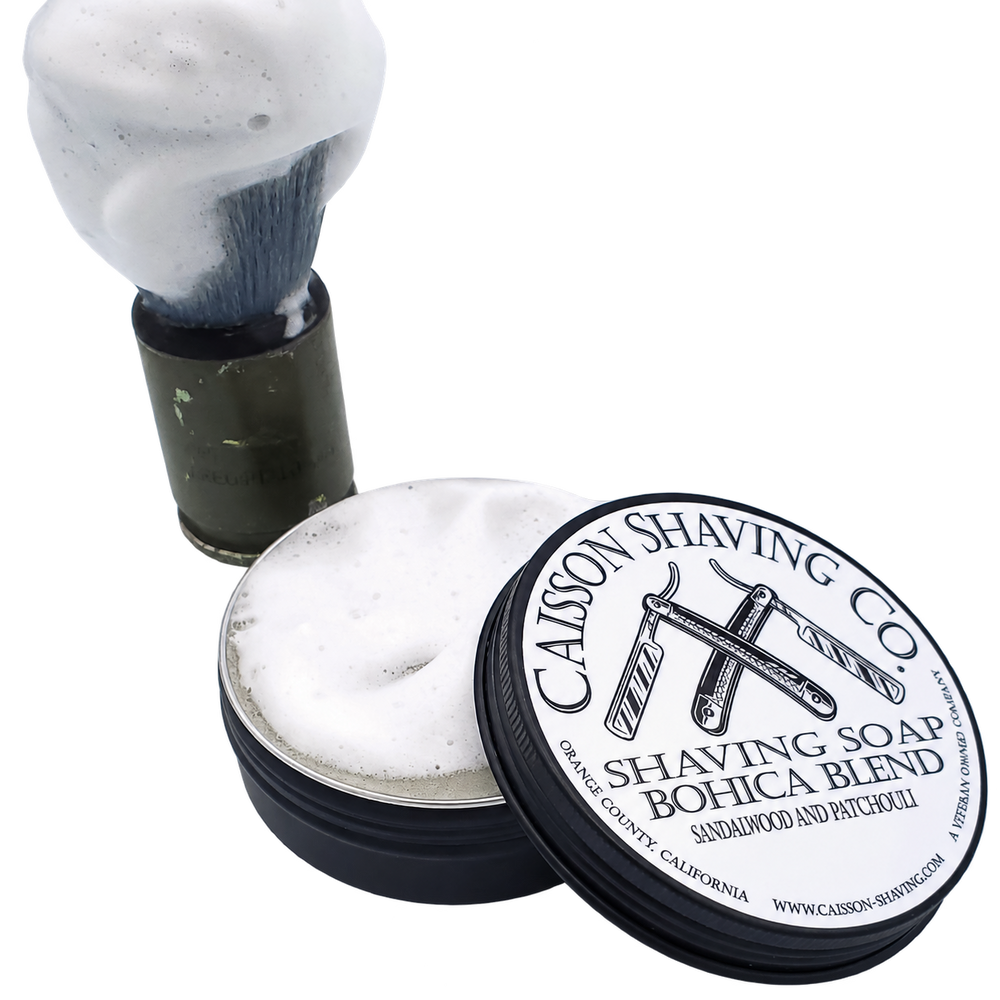
To use shaving soap, wet your skin, dampen your brush, load soap onto the bristles, and add a little water at a time while building the lather. That's the basic job. You don't need a shelf full of equipment or a lather big enough to qualify for its own barracks.
This guide walks through the brush method with Caisson's soap, then covers using your hands and fixing a lather that isn't cooperating.
What you need
- Shaving soap
- A shaving brush, if you're using the brush method
- Warm water
- Your usual razor
- A bowl if you want one, but it isn't required
Our 24mm synthetic shaving brush can build lather directly on wet skin or in a shaving bowl. Start with whichever method is easiest at your sink.
1. Wet the area you're shaving
Begin with wet skin and hair. Right after a shower is a convenient time. The American Academy of Dermatology recommends wetting skin and hair before shaving to soften them.
Use comfortably warm water. There is no prize for using water hot enough to make you flinch.
2. Dampen the brush and load the soap
Wet the bristles with warm water, then shake off the excess. You want a damp brush rather than water pouring out of it.
Work the brush over the soap with light circular movements so soap collects on the bristles. Loading is the step where you pick up soap; building lather is where you work that soap with water. Trying to do everything in a flooded tin makes the balance harder to judge.
Skip a rigid stopwatch rule. Brush size, how wet it is, and how much lather you want will change how much soap you need. Start modestly and load more if you run short.
3. Build the lather, adding water gradually
Work the loaded brush gently over wet skin, or move it into your bowl. Add a few drops of water and keep working the lather. Repeat as needed instead of pouring in a large amount at once.
A useful target is an even, creamy layer that spreads easily and stays on the area you're shaving. It shouldn't be dry paste, and it shouldn't run down your neck. You don't need an enormous mound of foam.
Let the bristle tips do the work. You don't need to grind the brush flat against your face or the bottom of the bowl.
4. Shave, then reapply before another pass
Follow your razor's instructions and shave in the direction your hair grows. Rinse the blade frequently. If you want to go over an area again, apply fresh lather first. If the lather has dried while you worked elsewhere, wet and rework it before continuing.
Keep the first few shaves simple while you learn the soap-to-water balance. Adjust one thing at a time so you can tell what helped.
Quick lather troubleshooting
- Thick, sticky, or hard to spread: work in a little more water, a few drops at a time.
- Watery, bubbly, or sliding off: you may have started with too much water for the amount of soap. Load a little more soap and work it in. Start with a less-wet brush next time.
- Not enough for the next pass: reload the brush. At the next shave, start with a little more soap rather than trying to stretch a thin layer.
- Good at first, dry by the time you reach it: rewet and refresh the lather. You can also lather smaller sections as you go.
These are starting adjustments, not proof that your soap or brush is faulty. If a product causes irritation, stop using it rather than trying to fix the reaction with more water.
Can you use shaving soap without a brush?
Yes, with Caisson soap. Work a small amount between wet hands and apply it directly to wet skin, adding water as needed. A brush gives you another way to distribute and build the lather, but it doesn't have to come along every time you pack light.
Clean up before you close everything
Pour off standing water from the soap tin and let the soap surface dry before closing the lid. Rinse the brush thoroughly, including the middle of the bristles, and leave it in a ventilated place to air-dry. Let it dry before closing it inside the travel container.
Ready to start? Choose a Caisson shaving soap or a soap and brush kit. Keep your usual razor while you get the lather figured out.
Still choosing gear? See what to buy for your first soap-and-brush setup. Once you have a routine, learn what affects how long a tin lasts and how to calculate your own cost per shave.